
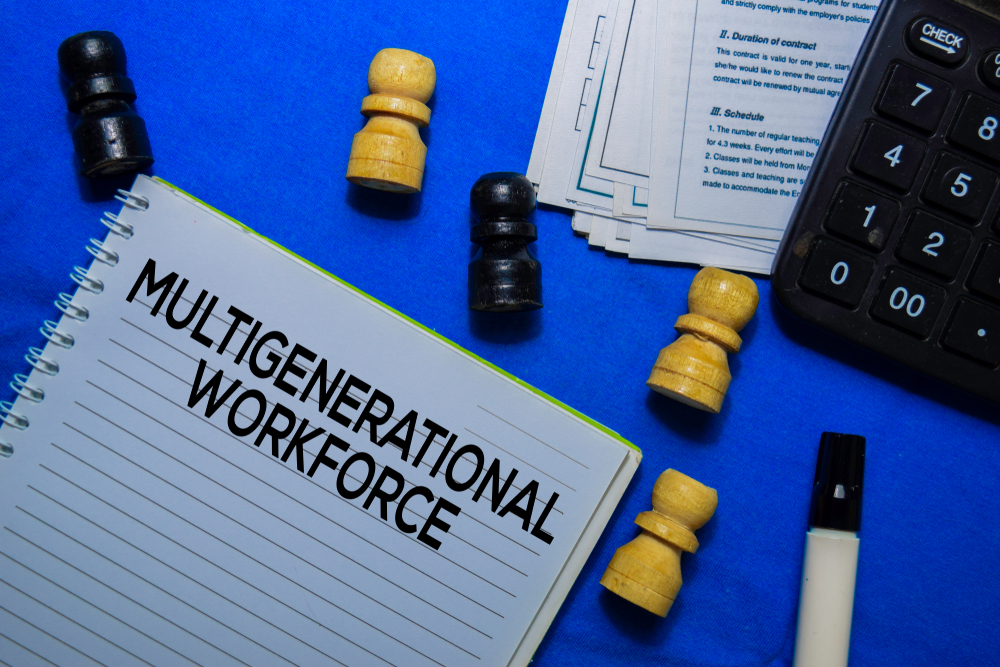
At WAHVE, we know firsthand that age is an asset. For the first time in history, five generations are working side by side. By 2028, one in four U.S. workers will be 55 or older—more than double the rate in 1998.
This isn’t a challenge to manage—it’s a strategic advantage. Companies that embrace age diversity build stronger, more resilient organizations. In fact, 83% of employers say mixed-age teams are essential for success and growth. Yet despite this recognition, unconscious bias continues to creep into hiring practices, leaving older candidates 40% less likely to receive job offers after in-person interviews compared to younger peers.
Why Generational Diversity Matters
The evidence is clear: diverse teams consistently outperform homogeneous ones. When employees bring different skills, experiences, and perspectives, innovation accelerates and outcomes improve.
Each generation adds unique value:
- Younger employees bring fresh perspectives, adaptability, and digital fluency.
- Mid-career professionals contribute leadership, experience, and industry depth.
- Older workers offer wisdom, mentorship, and resilience.
Together, these strengths create teams that solve problems more effectively and serve customers more authentically.
Confronting Age Bias in Hiring
Bias often shows up in subtle ways. Job postings using terms like “digital native” or “recent graduate” may discourage experienced candidates from applying. Likewise, assumptions about being “overqualified” or “too close to retirement” can lead managers to overlook exceptional talent.
Here are some practical ways organizations can counteract these biases:
- Use inclusive language in job postings (say “entry-level” instead of “recent graduate”).
- Focus on skills and results—not age-based assumptions.
- Expand recruiting to include alumni groups, professional associations, and older-worker networks.
- Apply structured interviews and evaluation scorecards.
- Incorporate work samples to let candidates demonstrate skills directly.
These approaches don’t just support older workers—they make hiring more equitable for everyone.
The Manager’s Role: Catching Bias in Real Time
Even the best systems can’t remove bias completely. That’s why managers play a critical role. When someone calls a candidate “overqualified,” leaders can reframe the conversation around the value that person brings. If concerns are raised about “fit,” managers can redirect discussions toward measurable skills and contributions.
Creating accountability at the hiring table ensures bias doesn’t go unchecked.
Building an Age-Inclusive Culture
True change requires more than new processes—it demands a cultural shift. Organizations can build momentum by sharing success stories, celebrating age-diverse hires, and weaving bias-awareness into performance reviews.
Companies that embrace multigenerational hiring gain a competitive edge. They innovate faster, adapt better, and earn reputational benefits with both employees and customers.
At WAHVE, we’ve built our business around this belief. The future of work belongs to companies that harness the collective strengths of every generation. By eliminating age bias, we don’t just do what’s right—we help organizations build stronger, more resilient futures.








0 Comments