
For years, the insurance industry’s talent strategy followed a familiar pattern. New employees started with relatively routine work. They reviewed straightforward submissions, processed policy changes, handled basic claims, checked documentation and learned the systems. With repetition, coaching and exposure to increasingly complex situations, they developed judgment. Eventually, beginners became experts.
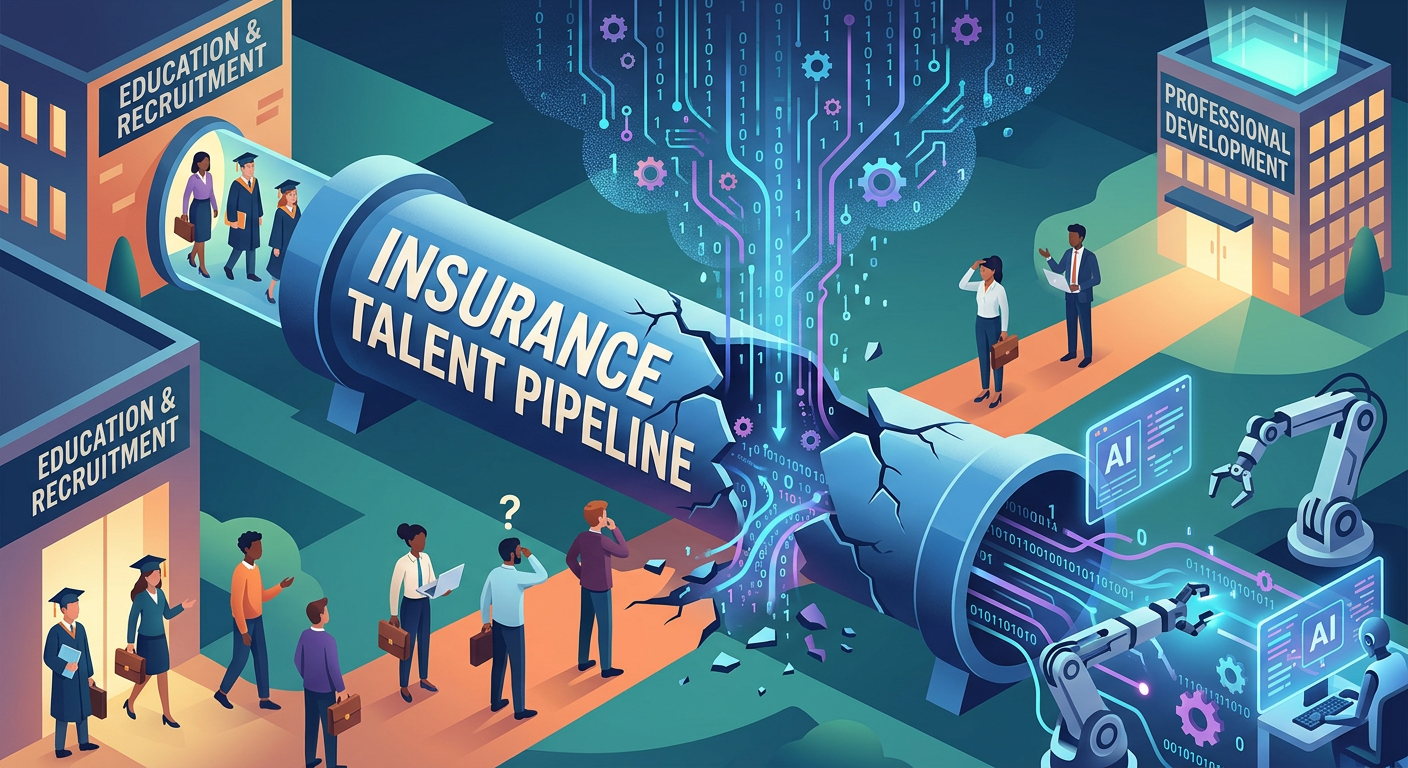
Artificial intelligence is beginning to disrupt that progression.
Organizations are understandably using AI to automate repetitive work, accelerate transactions and increase employee productivity. Those are legitimate benefits. But if AI absorbs too much of the foundational work traditionally performed by newer employees, the industry could unintentionally eliminate the training ground that produced its most experienced professionals. The immediate productivity gains may be attractive. The long-term workforce consequences could be significant.
Insurance Expertise Is Built Through Repetition. Insurance knowledge cannot be developed entirely through courses, manuals or certifications. Technical education matters, but expertise also comes from seeing hundreds of situations that are almost—but not quite—the same. An experienced underwriter recognizes when a risk deserves another question. A claims professional senses when the facts do not fit the expected pattern. An account manager anticipates the coverage concern a client has not yet articulated. A compliance professional understands how a regulator may interpret language that appears straightforward on paper. That judgment is developed over time.
Routine work has traditionally provided the repetition needed to recognize patterns, understand exceptions and learn how decisions affect customers and the organization. The work may have appeared administrative, but it was also educational. When AI performs those tasks, the work does not simply disappear. A critical stage of professional development may disappear with it.
The Emerging Expertise Paradox
AI is creating a paradox for insurance organizations: Human expertise is becoming more valuable at precisely the moment it may become harder to develop. As technology handles standard transactions, people will increasingly be responsible for the difficult cases—the exceptions, disputes, ambiguous coverage questions, complex risks and high-stakes customer interactions. These situations require more judgment, not less.
But how does an employee learn to manage an unusual claim without first handling ordinary ones? How does a new underwriter evaluate a complicated risk without reviewing more predictable submissions? How does someone learn to challenge an AI-generated recommendation without enough experience to recognize when it may be wrong?
A recent analysis from Boston Consulting Group warns that as routine insurance work disappears, the traditional route through which junior employees become seasoned professionals may disappear with it. The result is a workforce in which fewer people handle more consequential decisions, while the pipeline producing those people steadily weakens.
That is not simply an HR issue. It is an operational risk.
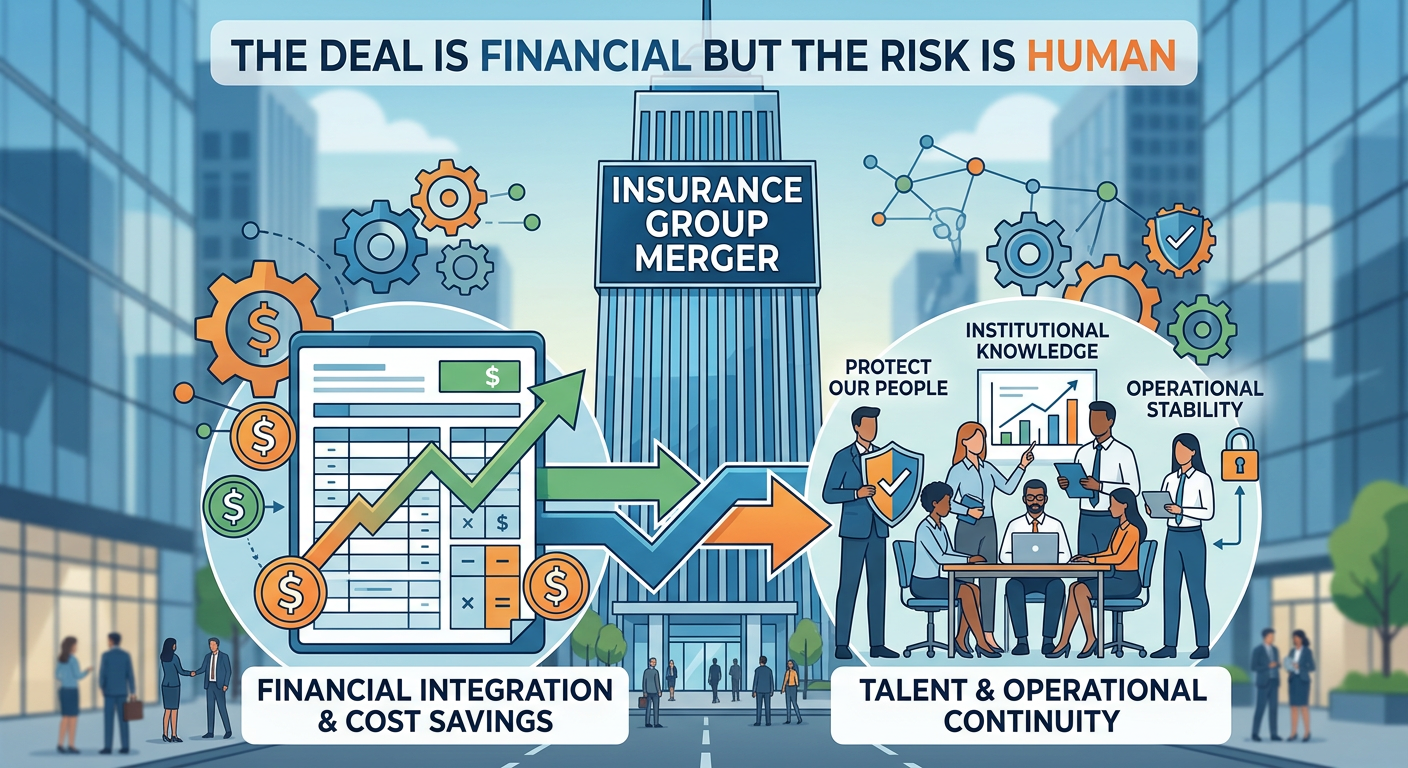
Efficiency Today Can Create a Skills Shortage Tomorrow. Most AI business cases measure what can be saved now: processing time, staffing expense, turnaround time and cost per transaction. Far fewer measure what the organization may no longer be teaching. If entry-level roles are reduced without a replacement development model, the effects may not become visible immediately. Experienced employees can continue handling complex work for a time. Productivity may even increase. Then retirements accelerate. Turnover occurs. Business volume changes. A new product, regulation or market condition creates unfamiliar challenges. Suddenly, the organization discovers that it has fewer people prepared to make the decisions technology cannot make on its own. The company did not merely reduce headcount. It weakened its future bench.
The Answer Is Not Preserving Outdated Work Organizations should not retain inefficient processes simply to give new employees something to do. That would miss the point. The answer is to redesign how expertise is built.
Tomorrow’s insurance professionals will need a more deliberate learning path—one that combines technology with guided exposure to real decisions. That may include:
- Allowing newer employees to review AI recommendations before seeing the final decision.
- Using completed cases to teach how experienced professionals evaluate ambiguity and exceptions.
- Pairing developing employees with seasoned specialists for structured case reviews.
- Rotating employees through underwriting, claims, service, compliance and operations.
- Measuring judgment development, not only transaction volume.
- Documenting why decisions were made, not simply recording the outcome.
- Giving employees controlled opportunities to question, test and override automated recommendations.
This is apprenticeship redesigned for an AI-enabled workplace. Experienced Professionals Have a New Role to Play The industry’s most experienced professionals should not be viewed only as people who can complete difficult work. They can also help organizations rebuild the learning systems that automation is disrupting. Professionals approaching retirement possess decades of pattern recognition, context and practical judgment. Many can explain why a process exists, where an exception is warranted and what warning signs are easy to overlook. Keeping these professionals engaged—whether through long-term contract assignments, mentoring, quality review or knowledge-transfer initiatives—can help organizations connect emerging technology with institutional expertise. This is especially important as the insurance industry experiences two workforce shifts simultaneously: experienced employees are retiring while AI is changing the work available to those entering the industry. Handled separately, each shift creates risk. Addressed together, they create an opportunity to build a stronger talent model.
A New Question for Workforce Planning Insurance leaders evaluating AI should ask more than, “What tasks can we automate?”
They should also ask: What did employees learn by performing those tasks—and how will they learn it now?
That question should be part of every automation strategy, workforce plan and technology investment.
AI can process information, identify patterns and recommend actions at extraordinary speed. But the insurance industry will continue to need people who understand context, exercise judgment, challenge questionable results and take responsibility for consequential decisions.
Those experts will not appear automatically. If the industry wants experienced professionals tomorrow, it must intentionally create the experiences that develop them today.








0 Comments